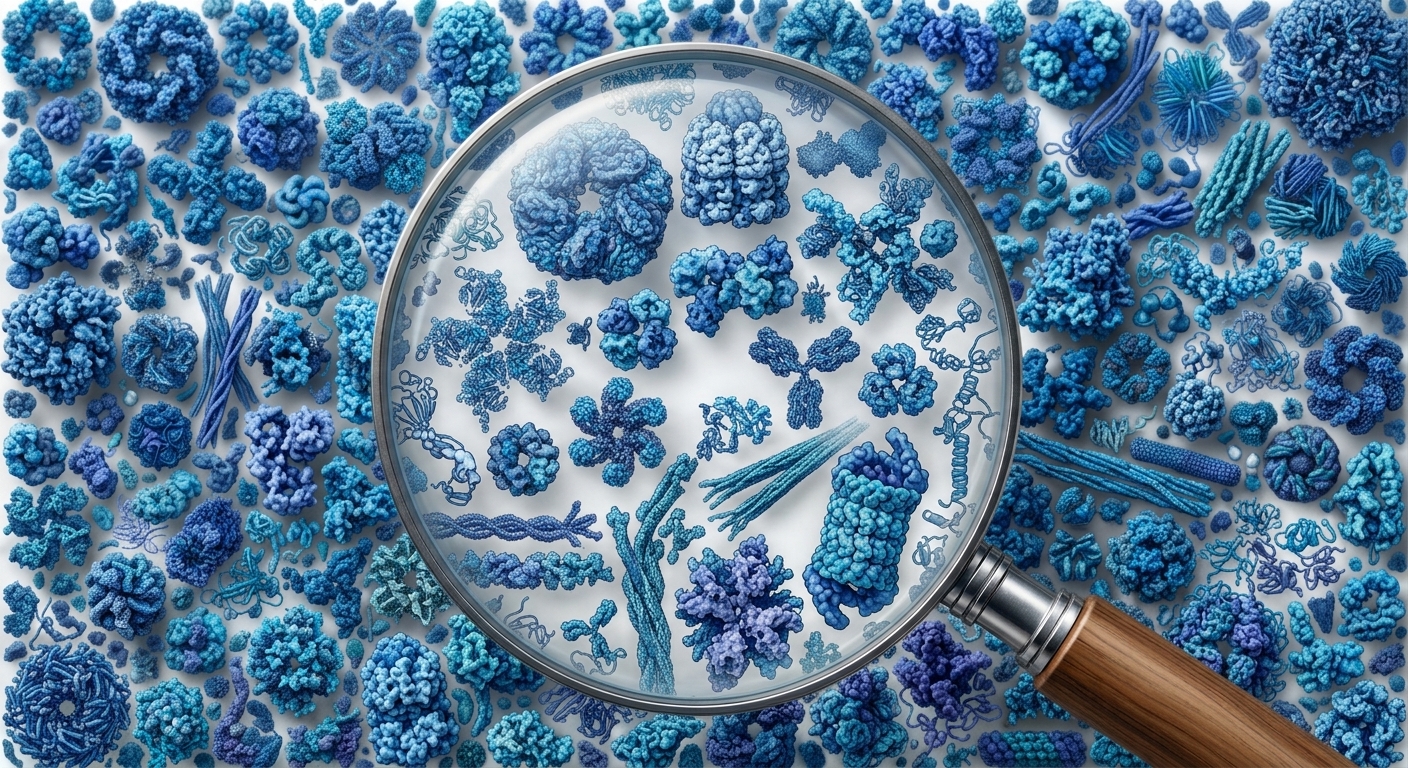
A preprint from Anthropic is generating a great deal of discussion at the moment. In it, AI agents built on Claude searched a database of 1.94 billion groups of proteins taken from environmental DNA samples. They were looking for a family of enzymes that normally copy RNA into DNA, and they surfaced a new family that the authors call “ART”. It is found in very large viruses that infect bacteria, and it sits beside a stretch of DNA made of repeated units, each about 200 letters long.
The agents worked from a research brief with broad goals: find new enzyme systems by looking for new genes that travel with them. The brief never mentioned repeating patterns. The agents built their own search tools, completed 119 tasks in under a day of elapsed time, and filed 19 written reports for human review. One agent rejected a promising lead as a coincidence but decided the enzyme itself deserved a closer look. Another agent, asked to examine the DNA in front of that enzyme, read it directly and described a repeating pattern that nobody had labelled. It then checked its own claim against the published literature to see whether the pattern was already known, before writing it up.
The authors then took over. They read the reports and the agents' reasoning, and directed follow-up analyses with Claude writing and running the code. Those analyses showed a real family of 95 related enzymes in viruses, about a quarter of which carried the repeated stretch. The pattern resembles the repeats in CRISPR, the bacterial immune system behind gene editing, but the units are much longer and no CRISPR machinery is nearby, so it appears to be something different. Public data showed that the repeats are copied into RNA in large amounts during infection, up to 8% of the virus's RNA at 15 minutes. The authors' own experiment, expressing the virus's system in bacteria, produced similar short RNAs. The AI proposed a direction that nobody had asked about, and people did the checking, judging, and testing. Collaboration is what made the finding usable.
The follow-up tests are the part I found most useful. The authors ran the same task 100 times for each of several Claude models, giving them the DNA either directly in the prompt or as files with analysis tools. The strongest models described the repeating pattern in at least 90% of attempts when the DNA was in the prompt. With files and tools, that fell as low as 32% for one model. In 39% of the file-based attempts by the strongest models, the model never read even 200 letters of continuous DNA. When the models read more, they spotted the pattern far more often. The set-up around an agent shapes what it notices, so a useful check for any team is what the agent actually looked at.
The discovery happened in one of eleven runs of the same process. In the ten repeat runs, no agent read the DNA in front of the enzyme, so the pattern was missed every time. The authors attribute this to the size of the search and to the randomness in how agents behave, which seems plausible but has not been tested, so it is not yet clear how reliably the result can be repeated. The analysis of the model's internal activity shows that certain signals respond to repeats, and it does not show that they caused the discovery. The tests of the models were designed by the authors and scored by a Claude model. The authors state plainly that they have not shown what these enzymes do, so the finding is best read as a well-supported hypothesis based on sequence data. A comparison with a simple, conventional program that searches for repeats would help to separate what the agents found from where they happened to look.
The first step is laboratory testing of what the enzyme does, whether the repeat-derived RNAs act as templates, and what the system does for the virus. The second is to connect agents like this to automated laboratory experiments that test what they propose. In my own work, trust was built by a sceptical colleague, a set of test cases, and confirmation in the lab. That combination turns an interesting idea into something people can rely on.
Author: Layla Hosseini-Gerami


